
Quick Answer: How to Check Annapurna Bhandar Status
- Step 1: Visit the official NPCI BASE Portal.
- Step 2: Navigate to the Customer tab and click Aadhaar Mapping Status.
- Step 3: Enter your 12-digit Aadhaar number and authenticate with the OTP sent to your linked mobile number.
- Step 4: Check which bank is actively mapped for Direct Benefit Transfers (DBT). If a valid bank is shown, your ₹3,000 payment will be deposited there.
- Offline Option: Visit your local Block Development Office (BDO) with your Application Reference Number.
The West Bengal government introduced a groundbreaking scheme, Annapurna Bhandar (also widely known as Annapurna Yojana), launched officially on 3 June 2026. Replacing the widely known Lakshmir Bhandar scheme, this massive initiative aims to empower women and ensure household food and financial security across the state.
Under this scheme, eligible women aged between 21 and 60 years receive a massive upgrade in support: a flat Rs 3,000 per month deposited directly into their Aadhaar-linked bank accounts through the highly secure Direct Benefit Transfer (DBT) system. The application window is open from 27 May to 25 August 2026.
Real-Time Update: July 2026 Installments & Rejections
The West Bengal Government successfully released the July 1st installment, benefiting over 1.3 crore women statewide. However, due to strict verification protocols regarding citizenship, income, and domicile, approximately 2.6 million applications were rejected. If you applied during the initial rollout, performing an Annapurna Bhandar scheme status check is absolutely critical right now to ensure you receive your payments.
1. Understanding the Annapurna Bhandar Scheme
The Annapurna Bhandar Scheme represents the largest direct cash transfer initiative in the history of West Bengal. Recognizing the economic challenges faced by households, the state government designed this scheme to provide a reliable financial safety net. Unlike previous schemes that offered variable amounts based on caste category (SC/ST vs. General), the Annapurna Yojana democratizes the financial aid, offering a flat ₹3,000 to all eligible women.
| Feature | Details |
|---|---|
| Scheme Name | Annapurna Bhandar / Annapurna Yojana |
| State | West Bengal |
| Financial Assistance | ₹3,000 per month |
| Age Limit | 21 to 60 Years |
| Target Beneficiary | Women permanent residents of West Bengal |
| Official Website | socialregistry.wb.gov.in |
2. Comprehensive Eligibility Criteria
To qualify for the monthly financial assistance, an applicant must navigate a strict set of eligibility parameters. The government has tightened the rules to ensure funds reach only the economically weaker sections of society.
- Gender Requirement: Only women are eligible to apply. The scheme is designed exclusively for female heads or members of the household.
- Residency: The applicant must be a permanent resident of West Bengal. Proof of long-term residency is required during the verification stage.
- Age Bracket: Women aged between 21 and 60 years qualify for the scheme. Once a beneficiary turns 60, they are transitioned to the old-age pension schemes.
- Employment Status: The applicant must not be a permanent government employee. This includes individuals receiving a regular salary or pension from the state government, central government, statutory bodies, or aided institutions.
- Tax Status: The applicant must not be an income taxpayer. This is a critical check performed against PAN records.
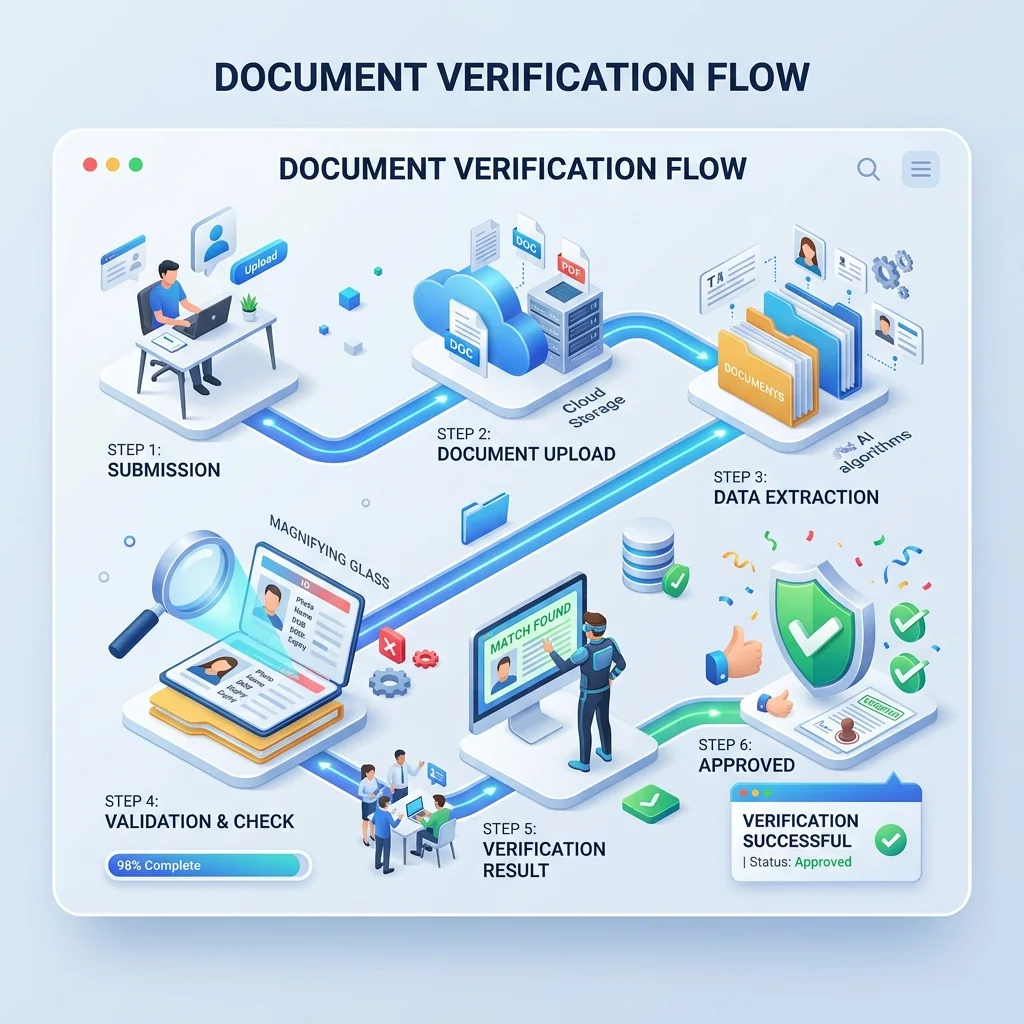
Fig 1: The rigorous verification process involves electoral roll screening, Aadhaar validation, and bank mapping.
3. Required Documents Checklist
Whether you are applying online via the Social Registry portal or offline at a Duare Sarkar camp, submitting the correct documentation is non-negotiable. An incomplete dossier is the fastest route to an application rejection.
Ensure you have self-attested copies (for offline) or clear scanned copies (for online) of the following:
- Aadhaar Card: Absolutely mandatory. Your Aadhaar is the backbone of the Direct Benefit Transfer (DBT) linkage.
- Voter ID Card (EPIC): Serves as proof of identity, age, and residency in the state.
- Swasthya Sathi Card: The state health card is highly recommended and often mandatory for seamless integration into the state's welfare registry.
- Bank Account Details: The first page of your bank passbook or a canceled cheque. The account MUST be a single (personal) account in the applicant's name. Joint accounts are frequently flagged and rejected.
- Residence Proof: Any additional government-issued document verifying your West Bengal address (Ration card, utility bill).
- Passport-size Photographs: Recent, clear photographs of the applicant.
4. How to Perform an Annapurna Bhandar Scheme Status Check
If you have submitted your application and the documentation, the next critical phase is the waiting period. Currently, the official citizen portal (socialsecurity.wb.gov.in) is processing a massive volume of traffic, leading to intermittent downtimes.
While granular application status updates might not be immediately visible on the state portal, the most reliable way to perform an Annapurna Bhandar status check is to verify your DBT bank linkage status. If your Aadhaar is correctly seeded to an active bank account, your payment will process successfully once the District Magistrate (DM) approves the file.
Step-by-Step Guide to Checking Your Payment Status:
- Visit the NPCI BASE Portal: Go to the official National Payments Corporation of India (NPCI) website and navigate to the Bharat Aadhaar Seeding Enabler (BASE) section located under the 'Customer' tab.
- Select Aadhaar Mapping Status: Click on 'Aadhaar Mapped Status'. You will be prompted to enter your 12-digit Aadhaar number. Type this carefully.
- Verify with OTP: You will receive a One-Time Password on the mobile number linked to your Aadhaar. Enter this code to proceed past the security gateway.
- Check Bank Seeding Status: The portal will display a dashboard showing which bank account is currently active for receiving Direct Benefit Transfers (DBT). If this shows your current, active bank account, your Annapurna Bhandar payment is routed correctly. If it shows "Inactive" or a closed account, your payment will fail.
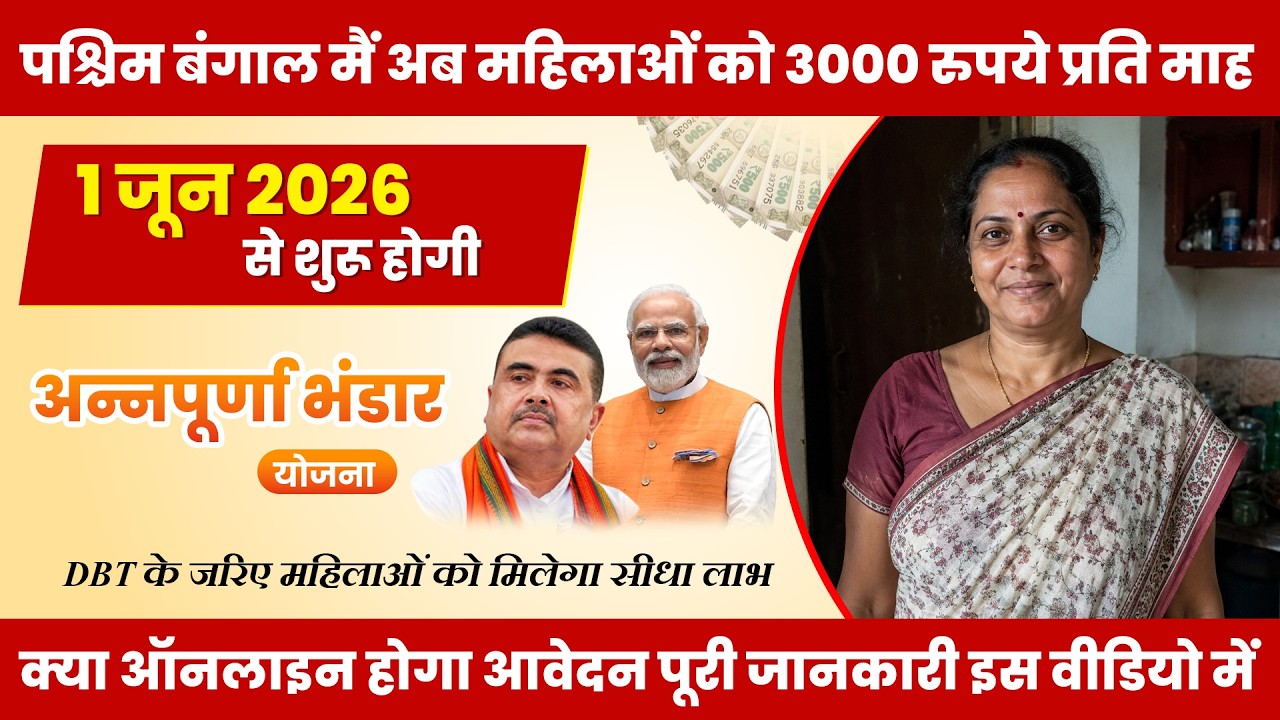
Video Guide: Understanding the DBT Seeding process and checking your status online.
Offline Alternative: If you do not have internet access or a smartphone, do not panic. You can visit your local Block Development Office (BDO) or Sub-Divisional Office (SDO). Provide them with your Application Reference Number, and the clerks can access the internal Social Registry portal to perform a manual status check.
5. Why Were 2.6 Million Applications Rejected?
The staggering number of rejections in July 2026—over 2.6 million—has caused massive confusion across the state. The verification process for Annapurna Bhandar is significantly stricter than its predecessor. The government utilized advanced cross-referencing databases to filter out ineligible candidates. Here are the primary reasons applications were flagged and rejected:
-
Electoral Roll Discrepancies (ASDD): The scheme strictly excludes illegal migrants and non-residents. Applicants whose names were marked as Absent, Shifted, Dead, or Duplicate (ASDD) during the Special Intensive Revision (SIR) 2026 of voter lists were immediately removed from the beneficiary pool. If your Voter ID data does not perfectly match your physical residency, the application fails.
-
Income Tax and Employment Cross-checks: The scheme targets economically weaker households. The state government ran the Aadhaar/PAN databases against the Income Tax Department's registry. Women who filed Income Tax Returns (ITR) or hold permanent government jobs (including municipal and panchayat employees) were automatically disqualified by the algorithm.
-
Bank Account Failures (DBT Bounce): A massive point of failure in any DBT system is a closed, dormant, or unseeded bank account. If your Aadhaar is linked to a dormant account, or if you provided a joint account instead of a single account, the transaction bounces back to the treasury, marking the status as failed.

Fig 2: Direct Benefit Transfers rely on highly secure, encrypted pathways to ensure funds reach the intended recipient without intermediary interference.
6. Lakshmir Bhandar to Annapurna Bhandar: The Migration
If you were already receiving funds under the older Lakshmir Bhandar scheme (which provided Rs 1,000 for General Category and Rs 1,200 for SC/ST), you might be wondering about the transition to the Rs 3,000 payout.
Out of the massive 2.20 crore enrolled Lakshmir Bhandar beneficiaries, a sweeping data audit was conducted. This audit removed approximately 30 lakh ineligible individuals who were either deceased, had moved out of state, or no longer met the financial criteria.
The remaining approx. 1.9 crore beneficiaries were auto-migrated to the Annapurna Bhandar scheme. If you fall into this category, no fresh application is required. Your benefits have automatically upgraded to the flat Rs 3,000 per month, deposited via the exact same DBT channel you have been using. If you have not received the increased amount, checking your status via the NPCI portal is your first diagnostic step.
7. District-Wise Implementation in West Bengal
The Annapurna Bhandar scheme is a state-wide initiative, meaning eligibility criteria are uniform from the hills of Darjeeling to the coastal regions of South 24 Parganas. However, the administrative sanctioning authority varies slightly by region:
- Rural Areas: In rural districts (e.g., Bankura, Purulia, Birbhum, Malda), the Block Development Officers (BDOs) handle the primary vetting, and the District Magistrates (DMs) hold the sanctioning authority.
- Urban Municipalities: In urban areas outside Kolkata, the Sub-Divisional Officers (SDOs) handle the vetting process.
- Kolkata Municipal Corporation (KMC): For residents of Kolkata, the Commissioner of the KMC acts as the sanctioning authority, with local ward offices managing the data intake.
Regardless of your district, the digital backend processing remains centralized in Kolkata.
8. Fixing Issues: How to Update Your Bank Account Online
If your Annapurna Bhandar scheme status check revealed that your Aadhaar is linked to an incorrect, dormant, or closed bank account, you must update it immediately to receive your pending Rs 3,000 payments.
Navigate back to the NPCI BASE Portal. Select the 'Aadhaar Seeding / Deseeding' option. Follow the prompts to map your Aadhaar to your preferred, active bank account. Once authenticated via OTP, the system updates your routing information globally. The next time the state treasury initiates a payment batch, your funds will route to the newly seeded account.
9. The Technical Infrastructure Behind Massive Welfare Portals
Have you ever wondered how the government processes millions of applications, cross-references massive databases (Aadhaar, Voter ID, Income Tax), and processes 1.3 crore financial transactions in a single day?
Handling this scale of data requires enterprise-grade cloud infrastructure, massive relational databases, and hyper-secure IP networks. This is exactly where companies like RARVPS.Com excel. We provide the robust, high-performance Linux VPS servers and Windows RDP environments that developers rely on to build mission-critical, large-scale portals.
When millions of users simultaneously attempt an Annapurna Bhandar status check, the servers must handle the traffic spike without crashing. With our clean IP series and enterprise SSD NVMe storage, we guarantee 99.99% uptime for data-heavy applications. Whether you are running a massive eCommerce site, a corporate database, or a high-traffic blog, RARVPS provides the foundational infrastructure you need to succeed securely.